🥳 Events Blog
How to Get Performers, DJs, Speakers, and Promoters to Help Sell Tickets

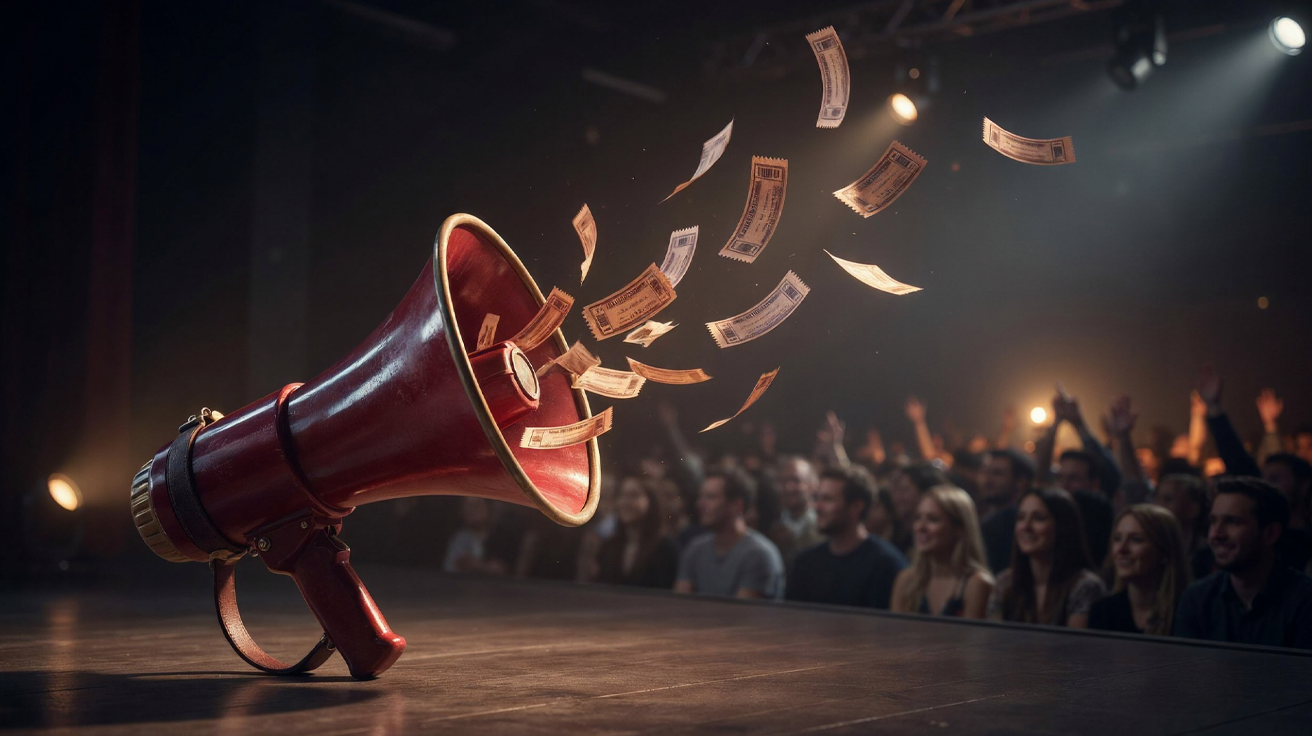
Selling tickets shouldn’t be the responsibility of the organizer alone.
If you’re putting on a concert, comedy show, boxing event, conference, festival, club night, workshop, or any other live event, you already have people connected to audiences who could help promote it.
Your performers have followers.
Your DJ has regular fans.
Your speakers have professional networks.
Your promoters have their own contacts.
Your partners have customers.
So why not give them a simple way to help sell tickets — and reward them when they do?
With the right system, your event can turn its entire network into a team of ticket sellers.
Here’s how to make it work.
🎟️ Stop Asking People to “Just Promote the Event”
One of the biggest mistakes organizers make is sending a performer or promoter a poster and saying:
“Can you post this?”
They might post it once.
They might forget.
They might share it to a story.
And you’ll have no idea whether their post generated five ticket sales or fifty.
Instead, give every partner a simple, trackable way to promote the event.
For example:
“Here’s your personal ticket link. Share it with your audience. Every ticket purchased through your link is tracked back to you.”
Now everyone knows exactly what they’re responsible for.
And you have a way to measure the results.
This changes the relationship from:
“Please help promote my event.”
to:
“Here’s an opportunity for you to earn money by bringing your audience.”
That’s a much more compelling proposition.
🔗 Give Every Partner Their Own Trackable Link
The foundation of a successful event affiliate program is tracking.
Each performer, DJ, speaker, promoter, influencer, partner, or ambassador should have their own unique referral link.
For example:
- Performer A → their personal ticket link
- DJ B → their personal ticket link
- Speaker C → their personal ticket link
- Promoter D → their personal ticket link
When someone clicks that link and purchases a ticket, the sale can be attributed to the person who referred the customer.
This gives organizers valuable information.
You can see:
- Who is actually generating ticket sales
- Which performers are promoting the hardest
- Which promoters have the strongest audiences
- Which partners are driving conversions
- Which promotional relationships are worth continuing
- Which marketing channels are producing results
Instead of guessing who is helping, you have actual performance data.
💰 Set a Commission Everyone Understands
If someone is helping sell your tickets, they should understand exactly how they get rewarded.
Before the event goes on sale, establish your commission structure.
For example, you could offer:
$5 per ticket sold
or
10% of each ticket sale
or create different incentives based on performance.
For example:
| Tickets Sold | Reward |
|---|---|
| 1–10 | Standard commission |
| 11–25 | Higher commission |
| 26–50 | Bonus |
| 51+ | Additional bonus |
The exact numbers will depend on your ticket price, event costs, margins, and business model.
The important thing is clarity.
Tell partners:
- What percentage or amount they receive
- What counts as a completed sale
- When commissions are calculated
- When commissions are paid
- Whether refunds or cancellations affect commissions
- Whether bonuses are available
Put the terms in writing before anyone starts promoting.
That prevents misunderstandings later.
📣 Give Your Partners Everything They Need to Promote
Don’t make your performers or promoters create your marketing campaign for you.
They’re busy.
If you want them to promote your event, make it incredibly easy.
Create a simple promotional package containing:
📸 Social Media Graphics
Provide ready-to-post graphics for:
- Instagram posts
- Instagram Stories
- TikTok
- X
- LinkedIn, where appropriate
- WhatsApp sharing
Create several versions rather than giving everyone the exact same graphic.
For example:
“I’m performing at…”
“Catch me live…”
“Tickets are now available…”
“Last chance to get tickets…”
Now your performer doesn’t have to figure out what to say.
They can simply post.
✍️ Give Them Ready-Made Captions
A good promotional package should include suggested copy.
For example:
Launch post:
I’m excited to be part of [EVENT NAME] on [DATE] at [VENUE]. Tickets are now available — grab yours through my link!
One-week reminder:
One week until [EVENT NAME]! If you’re coming, don’t wait until the last minute. Get your tickets here: [TRACKABLE LINK]
Final push:
We’re almost here! If you haven’t grabbed your ticket yet, this is your reminder. See you at [EVENT NAME]!
The partner can personalize the message, but you’ve already done the hard part.
🎥 Give Them Content They Actually Want to Share
Don’t only give people a static event poster.
Give them content.
Depending on your event, that could include:
- Performer announcement videos
- Behind-the-scenes clips
- Venue previews
- Speaker introductions
- DJ previews
- Training footage
- Event setup
- Previous-event highlights
- Short interviews
- Countdown graphics
- Audience reactions
- Event teasers
A 15-second video from a performer saying “I’ll see you there” can feel much more personal than another generic promotional graphic.
The goal is to give your partners content that fits naturally into their existing social feeds.
🧑🎤 Let Performers Sell to Their Own Fans
One of your biggest advantages is that performers already have relationships with audiences.
A musician doesn’t have to convince their followers that they are worth watching.
A DJ already has people who want to see them perform.
A comedian already has fans who enjoy their material.
A speaker already has an audience interested in their subject.
That makes them powerful event promoters.
Instead of trying to reach every potential attendee yourself, give performers the tools to reach the people who already care about what they do.
🎧 DJs Can Be More Than Entertainment
DJs are another potentially valuable promotional partner.
A DJ may have:
- Instagram followers
- Regular club attendees
- Email contacts
- WhatsApp groups
- Other DJs in their network
- Local nightlife connections
- Repeat customers
Give the DJ their own referral link and promotional assets.
You can even create a simple goal:
“Bring 25 people through your link and receive an additional bonus.”
Now the DJ has a measurable target.
🎤 Speakers Can Reach Completely Different Audiences
Speakers can be particularly useful for conferences, seminars, business events, workshops, educational events, and networking events.
Their audience may be completely different from yours.
That’s valuable.
For example, a business conference might have:
- An organizer’s audience
- Speaker A’s professional network
- Speaker B’s LinkedIn audience
- A sponsor’s customers
- A partner organization’s members
Instead of treating these groups as one audience, give each partner a way to promote directly to theirs.
Your event can then reach multiple communities simultaneously.
📢 Give Promoters a Reason to Care About the Results
Some promoters will naturally be more motivated than others.
That’s why incentives can help.
You could create:
Individual Bonuses
Reward someone when they reach a specific number of sales.
Team Challenges
Create friendly competition between promotional partners.
Early-Bird Bonuses
Offer a higher commission for tickets sold during the early promotion period.
Last-Minute Bonuses
Increase the incentive during the final days if you need an extra push.
Milestone Rewards
For example:
10 sales → bonus
25 sales → larger bonus
50 sales → major bonus
You don’t necessarily have to make everything about money either.
You could recognize your top promoters publicly, offer VIP access, provide complimentary tickets, or give them additional promotional opportunities for future events.
📊 Track the Results — Not Just the Likes
Likes are nice.
Comments are nice.
Shares are useful.
But ultimately, ticket sales are what pay for the event.
That’s why trackable links are so important.
Imagine your event has five promotional partners:
| Partner | Tickets Sold |
|---|---|
| Performer A | 42 |
| DJ B | 18 |
| Speaker C | 31 |
| Promoter D | 67 |
| Partner E | 9 |
Now you know something you wouldn’t know from looking at social-media engagement alone.
You know who is actually generating ticket sales.
And that information becomes incredibly useful for your next event.
🔄 Use Your Best Promoters Again
Your affiliate data shouldn’t disappear when the event ends.
Keep track of the people who consistently generate results.
If someone sells 50 tickets for your event, that’s a relationship worth remembering.
When you announce your next event, they’re already a proven promotional partner.
You can contact them early and say:
“We’ve got another event coming up. Want to be part of the promotion team again?”
Over time, you can build your own network of reliable promoters.
That’s much more valuable than starting from zero every time you launch an event.
🎟️ Turn Performers Into Long-Term Partners
The relationship doesn’t have to end when the event does.
Your performers can become part of your event ecosystem.
Imagine an organizer who runs:
- Monthly comedy shows
- Quarterly concerts
- Annual festivals
- Regular boxing events
- Recurring networking events
Each event creates new relationships.
Some performers may promote one event.
Others may become regular partners.
Eventually, you can have a network of people who know your events, understand the system, and actively promote your upcoming shows.
Your ticket-selling network becomes an asset of its own.
🧠 Make Promotion Part of the Event Strategy From Day One
Don’t wait until three days before the event to ask everyone to start promoting.
Build the affiliate strategy into your launch plan.
Before Tickets Go On Sale
Identify your performers, DJs, speakers, promoters, sponsors, and partners.
At Launch
Give everyone their trackable links and promotional package.
During the Campaign
Monitor ticket sales and identify who’s generating results.
Two Weeks Out
Give partners updated graphics, videos, and urgency-focused messaging.
Final Week
Send everyone a final countdown package.
After the Event
Review the results and identify your strongest promotional relationships.
This turns promotion into an organized process instead of a last-minute scramble.
🎮 Combine Ticket Sales With Audience Engagement
Here’s where your event strategy can go beyond traditional affiliate marketing.
The Local Ticket can also help organizers use quizzes, trivia, polls, and surveys as part of the event experience.
For example, a boxing event could run trivia about the fighters.
A concert could run a fan poll asking which song the audience wants to hear.
A conference could run a pre-event survey asking attendees what topics they’re most interested in.
A comedy event could use interactive questions to learn more about its audience.
Now you’re not just selling tickets.
You’re building an audience database and learning what that audience actually wants.
🤝 Give Your Affiliate Network More Than a Link
A successful partner program isn’t simply:
“Here’s your link. Good luck.”
Give your partners a complete promotional toolkit:
Their trackable ticket link
Ready-made graphics
Suggested captions
Videos and promotional content
Clear commission terms
Sales milestones
Performance updates
The easier you make promotion, the more likely people are to actually do it.
📈 Turn One Event Into a Promotional Network
Here’s the bigger opportunity.
Your first event might have:
5 performers
2 DJs
3 speakers
4 promoters
2 sponsors
That’s 16 potential promotional relationships.
If each person reaches a different audience, your event suddenly has a much larger promotional footprint than the organizer could create alone.
And when the event is over, those relationships don’t have to disappear.
They can carry forward into your next event.
Your event isn’t just building an audience.
It’s building a network of people who can help you reach that audience.
📝 Event Affiliate Checklist
Before launching your next event, make sure you’ve covered these:
Partner Setup
☐ Identify performers, DJs, speakers, promoters and partners
☐ Create individual trackable links
☐ Explain the commission structure
☐ Explain payment timing and terms
Promotional Assets
☐ Create social media graphics
☐ Create Story-sized graphics
☐ Prepare suggested captions
☐ Create short promotional videos
☐ Prepare countdown content
During the Campaign
☐ Monitor ticket sales by partner
☐ Send regular updates
☐ Recognize strong performers
☐ Provide new content as the event approaches
☐ Create urgency during the final week
After the Event
☐ Calculate commissions
☐ Pay partners according to the agreed terms
☐ Review partner performance
☐ Identify your strongest promoters
☐ Invite successful partners to future events
🚀 The Local Ticket: Turn Your Network Into a Ticket-Selling Team
The best event organizers understand that they don’t have to sell every ticket themselves.
They can build a network around the event.
Performers bring fans.
DJs bring their communities.
Speakers bring professional audiences.
Promoters bring their networks.
Partners bring their customers.
And with The Local Ticket’s built-in affiliate network, organizers can give those people trackable referral links so ticket sales can be attributed to the people helping drive them.
Combine that with ready-made promotional assets, clear commission terms, audience quizzes, polls, trivia, and surveys, and your event becomes more than a ticketing page.
It becomes a system for selling tickets, engaging audiences, measuring results, and building relationships that can help grow your next event.
Because your next ticket sale might not come from another advertisement.
It might come from someone who’s already standing on your stage.